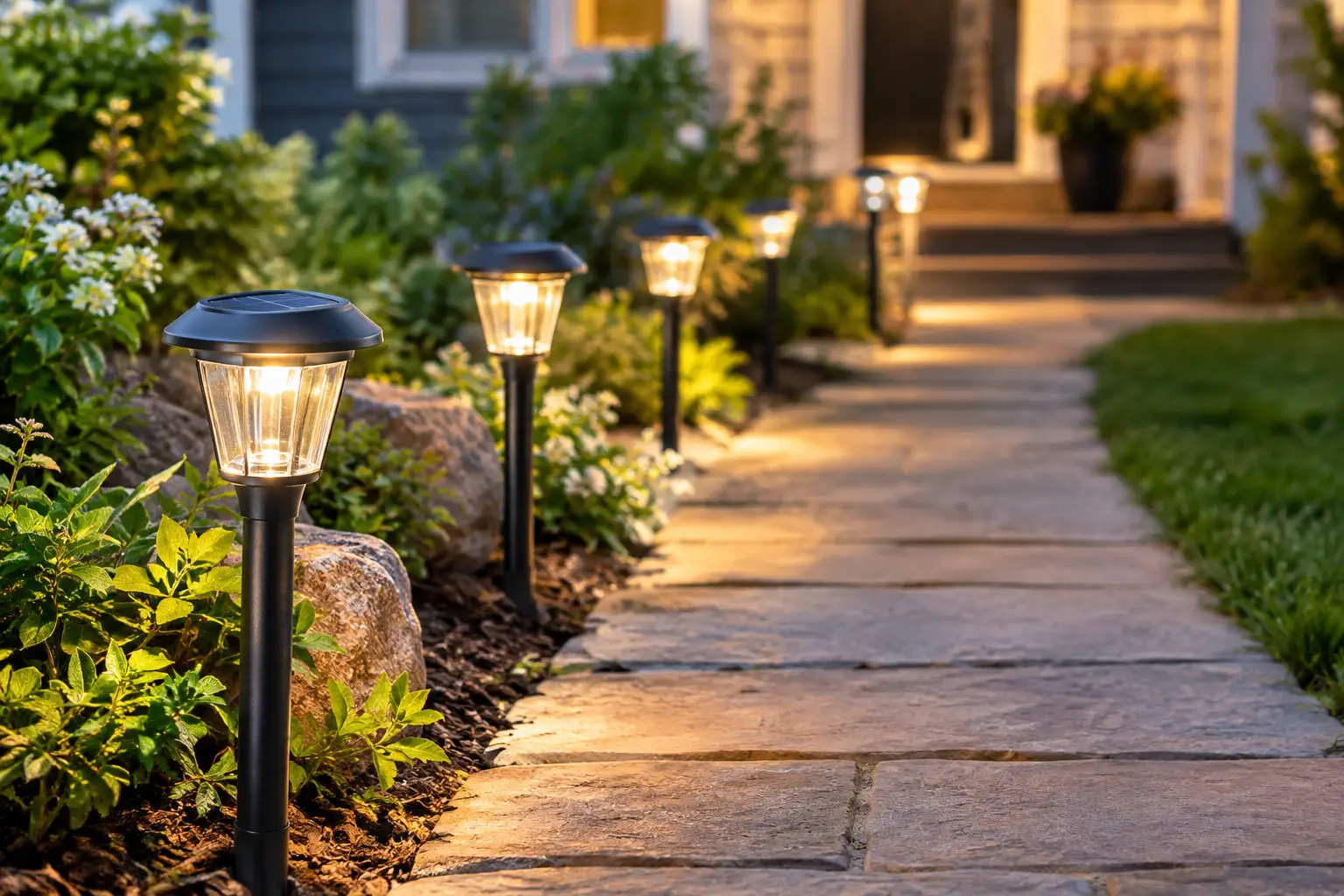
A dark path can make an otherwise inviting backyard feel unfinished. Solar pathway lights for backyard spaces offer a simple fix: they help guests see where they are walking, frame the parts of your yard you enjoy most, and add a welcoming glow without running electrical wire across the lawn.
They are also one of the easiest outdoor upgrades to make. The right lights can define the route from a deck to a fire pit, keep garden-bed edges visible after sunset, or give a side gate a little more everyday visibility. The key is choosing lights that fit your space and placing them with a purpose.
Start With the Path You Want to Light
Before choosing a finish or shape, walk your backyard at dusk. Notice where people naturally travel: from [the patio to the grill](https://www.theoutsideedit.com/grills-outdoor-cooking), around the pool, through a gate, or toward a seating area. These are the places where pathway lighting earns its keep.
Solar path lights work best as guide lighting, not as floodlights. Their job is to show the edge of a walkway and reduce dark spots, not turn the yard into a brightly lit parking lot. If you need strong light for stairs, cooking areas, or security near a back door, pair pathway lights with a dedicated outdoor wall light, motion-sensor fixture, or step light.
For a straight, clear walkway, place lights in even rows along both sides or one side of the path. Curving paths look better when the lights follow the bend at a consistent distance. In open grass, you can use them to create a visual route between outdoor zones, such as the patio and [a gazebo](https://www.theoutsideedit.com/gazebos) or garden bench.
How Many Solar Pathway Lights Do You Need?
Spacing makes a bigger difference than most shoppers expect. Lights placed too far apart leave distracting pockets of darkness. Lights placed too close together can look crowded and may create a runway effect.
For most backyard paths, plan for lights about 6 to 10 feet apart. Use the closer end of that range for narrow paths, stairs, uneven ground, or areas used often at night. Wider, low-traffic garden paths can usually handle more space between fixtures.
A short walkway may only need four to six lights. A longer route around a patio or garden may need eight to twelve. Rather than buying only the exact number you think you need, consider having a couple of extras on hand. They are useful for adjusting the layout after dark or extending the lighting to a gate, shed, or seating area.
Choose Brightness for Comfort, Not Glare
Brightness is often listed in lumens. For decorative solar pathway lights, lower output is normal. A soft glow can make a backyard feel calm and put together, while a brighter option is more useful where footing is a concern.
Look for a warm white light if you want a relaxed, familiar look around patios, planters, and garden beds. Cool white light can appear brighter and sharper, which may suit a more modern landscape or a path that needs clearer definition. If your backyard already has warm string lights, lanterns, or a fire pit, warm white pathway lighting usually creates a more coordinated result.
Keep in mind that solar lights vary in real-world brightness because they depend on the day’s sunlight. A light that performs well after a clear summer day may run for fewer hours after several cloudy winter days. This is expected, not necessarily a sign that the fixture is failing.
Check Your Sun Exposure Before You Buy
Solar lighting needs direct sun to charge well. A south-facing open area usually gives a solar panel the best chance to collect enough energy, but backyards are rarely that simple. Mature trees, rooflines, privacy fences, covered patios, and umbrellas can create more shade than you notice during the middle of the day.
Watch the intended location for a day before setting up your lights. If the top of each fixture will receive several hours of direct sunlight, solar lights are likely a good match. If the path stays shaded most of the day, choose a location with more sun, use solar lights only at the sunny end of the route, or consider a plug-in or low-voltage option for dependable all-night lighting.
Some models have separate solar panels connected by a cord. Those can help in tricky spaces because the fixture can sit in shade while the panel is placed in a sunnier spot. They take a little more planning, but they can be worth it near covered decks and heavily planted garden areas.
Pick Materials That Fit Your Backyard
Solar pathway lights come in plenty of styles, from simple black stakes to lantern-inspired fixtures and decorative designs with patterned light. Start with the materials already in your outdoor space. Black, bronze, and dark gray finishes are easy matches for most patio furniture, fences, and planters. Stainless steel can give a clean, contemporary look, though it may show water spots or fingerprints more readily.
Plastic fixtures are often a practical choice for families, renters, and shoppers looking to light a larger area at an affordable price. Better-quality plastic can handle everyday outdoor use well and is less likely to dent. Metal fixtures can feel more substantial and may better suit a permanent landscape plan, but check that they are made for outdoor weather exposure.
Glass lenses often provide a polished look and can create attractive light patterns. They also deserve more care around active play areas, pets, or places where lawn equipment passes close to the path. There is no single best material. The right choice depends on your budget, weather, and how hard your backyard works.
Place Lights Where They Will Last
Once you have your layout, install each stake in soil that is firm but not packed like concrete. Avoid forcing the fixture itself into hard ground. If the soil is dry or compacted, make a starter hole with a small tool, then insert the stake gently. This helps prevent cracking and keeps the light standing straight.
Keep fixtures a few inches back from the edge of the walkway. That protects them from shoes, mower wheels, and the occasional rolling ball while still giving the path a clear border. Near flower beds, place lights where they will not be swallowed by fast-growing plants by midsummer.
Be mindful of direct light from porch fixtures or security lights. Solar pathway lights can look dim when placed next to a much brighter source. Give them room to create their own pool of light, especially around a fire pit, garden path, or quiet seating corner.
Get More Reliable Performance Through the Seasons
Most solar lights turn on automatically at dusk and switch off when the stored charge is used. You can help them perform better with a few easy habits. Wipe pollen, dust, leaves, and bird droppings off the solar panel regularly. Even a thin layer of grime can reduce charging.
Trim back plants that begin shading the panels. After heavy rain or a windy week, straighten lights that have shifted and check that stakes remain secure. If a light starts fading sooner than the others, clean the panel first. If it still underperforms after several sunny days, the rechargeable battery may need replacement, depending on the model.
In areas with snow, severe freezes, or frequent storms, you may want to store lightweight solar lights during the harshest part of the season. For year-round installations, choose weather-rated fixtures and expect that shorter winter days may reduce run time. That trade-off is part of choosing solar power, but the no-wiring setup remains a major convenience.
Build a Backyard Lighting Plan That Feels Connected
Pathway lights look their best when they support the rest of your outdoor lighting instead of trying to do every job. Use them to guide movement, then add other lighting where people gather. [String lights](https://www.theoutsideedit.com/lighting-and-ceiling-fans) can soften a dining area, lanterns can add warmth to a coffee table, and step lights can make changes in elevation easier to see.
Try to repeat one or two finishes throughout the yard. For example, black pathway lights can pair easily with black planters, a dark patio umbrella frame, or a matching fire pit. This simple coordination helps a backyard feel intentional without requiring a full redesign.
At The Outside Edit, you can shop outdoor pieces with the whole space in mind, from the path underfoot to the seating, shade, and evening comfort around it. Start with the route you use most, place the lights after checking sun exposure, and let the glow lead people toward the parts of your backyard made for enjoying together.