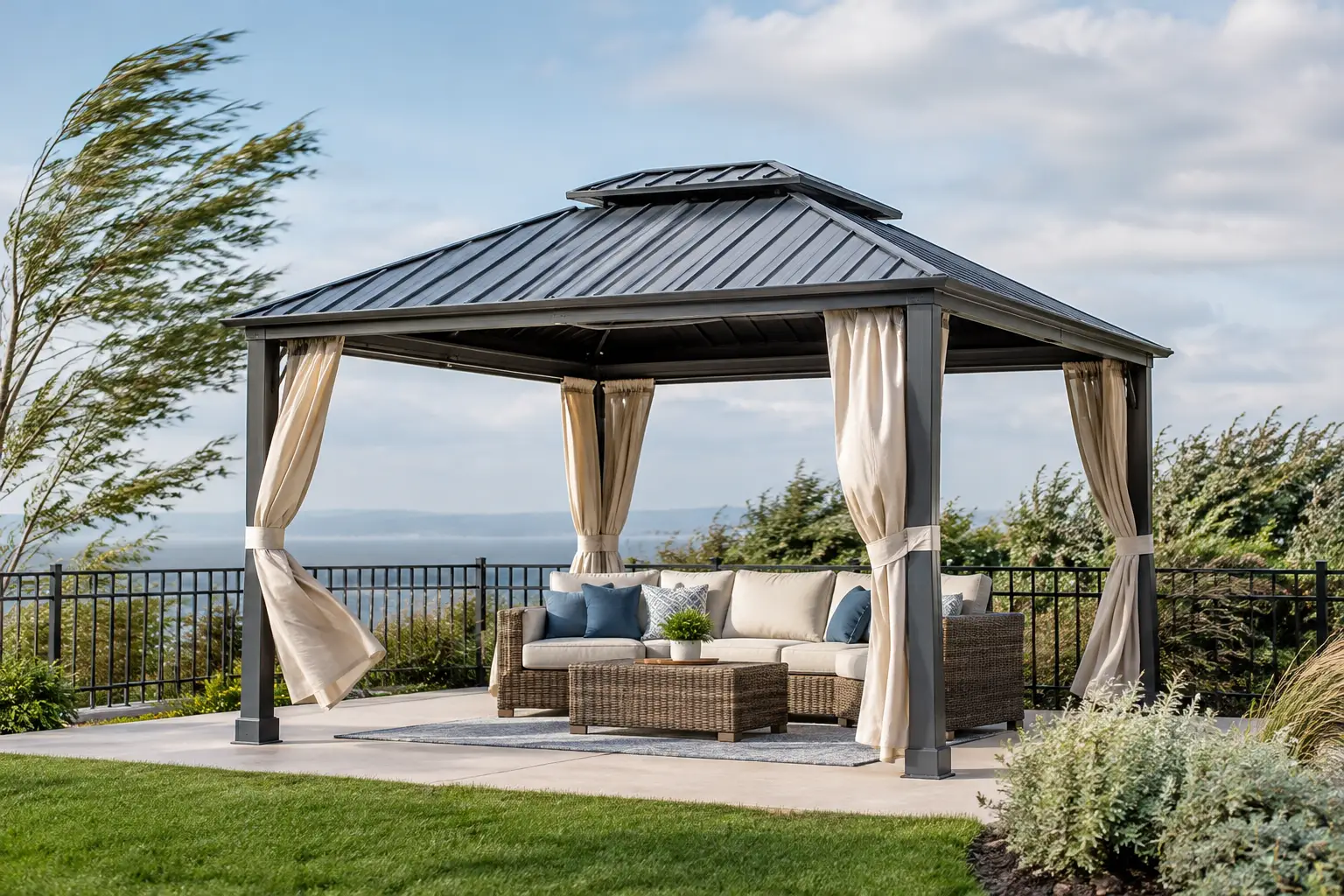
A breezy backyard can feel great until it turns a lightweight gazebo into something you have to chase across the lawn. Choosing a **backyard gazebo for windy areas** starts with looking beyond color, size, and price. The frame, roof shape, anchoring method, and installation surface all affect how well your shade structure handles regular gusts.
The goal is not to find a gazebo that can ignore any weather event. No residential gazebo should stay open during severe storms, high-wind warnings, or unsafe conditions. The right choice is one that fits your space, is properly secured, and gives you a comfortable outdoor spot on the many normal days when the wind is simply part of the forecast.
How to Choose a Backyard Gazebo for Windy Areas
Start by thinking about what “windy” means at your home. An open corner lot, a deck above ground level, a hilltop yard, and a patio beside a wide-open field can all catch more wind than a protected backyard. Notice where patio umbrellas lean, where leaves collect, and which direction rain tends to blow. Those small clues can help you choose the best location before you add anything to your cart.
For exposed spaces, a permanent or [hardtop gazebo](https://www.theoutsideedit.com/gazebos) is usually a better match than a pop-up canopy. Pop-up models are convenient for occasional use, but their lighter frames and fabric tops are not intended to remain assembled through changing weather. A fixed gazebo with a steel or aluminum frame, a solid roof, and mounting points gives you a more dependable foundation for everyday outdoor use.
Put the frame first
A gazebo frame carries the load from the roof down to the ground, so this is where value matters most. Look for substantial posts, reinforced corners, and clearly designed base plates that can be anchored to your surface. Powder-coated steel can offer strength at an accessible price, while aluminum resists rust and is easier to handle during assembly. Either can work well when the design and installation suit the space.
Pay attention to the connection points, not just the post material. Thin hardware, loose joints, or decorative frames without usable mounting holes can create problems once wind begins to push on the roof. A gazebo should feel solid after assembly, with all bolts tightened according to the product instructions.
Wood gazebos can also be a good option for a traditional backyard look. They are often heavier than metal models, but wood needs ongoing care to protect it from moisture, insects, and sun exposure. If you choose wood, plan for periodic sealing or staining as part of its upkeep.
Choose a Roof That Lets Wind Move Through
The roof catches the most wind, which makes its design especially important. Hardtop roofs made from metal panels tend to hold up better for long-term placement than soft fabric canopies. They also provide consistent shade and typically require less seasonal replacement. The trade-off is that hardtop gazebos cost more, take longer to assemble, and need a secure foundation from day one.
A double-tier or vented roof can be a practical feature in a breezy yard. The upper vent gives rising heat and some wind pressure a place to escape instead of trapping it under one large roof surface. It does not make a gazebo storm-proof, but it can reduce lift during everyday breezes and make the covered area feel cooler.
Fabric-top gazebos have their place, especially for renters or shoppers who need flexible seasonal shade. If you choose one, look for a taut canopy, a frame designed for outdoor use, and instructions for removing the cover when stronger wind is expected. Never assume added weight alone makes a soft-top gazebo safe to leave up in rough weather.
Sidewalls, curtains, and mosquito netting deserve the same caution. They add privacy and comfort, but closed panels can act like sails in a gust. Open or remove them when the wind picks up unless the manufacturer specifically says the gazebo is designed to support them in those conditions.
Anchor the Gazebo to the Surface You Have
A gazebo is only as secure as the way it is anchored. This is the decision that homeowners sometimes leave until the end, but it should come before purchase. Check the product’s installation requirements and make sure they work with your patio, deck, or yard.
On a concrete patio, posts are typically secured with appropriate concrete anchors through the base plates. This is often one of the most stable installation options, provided the slab is in good condition and thick enough for the required fasteners. Avoid placing anchors close to cracked edges or areas where the concrete is already failing.
On a wood deck, the gazebo should attach to structural framing, not only to deck boards. Deck boards are not designed to carry the pulling force created by wind. If you are unsure where joists and supports are located, ask a qualified installer or contractor before drilling.
In a grass yard, ground stakes may be suitable for temporary structures in mild conditions, but they are not a replacement for a permanent installation in a regularly windy location. Some fixed gazebos can be mounted to footings or a prepared concrete pad. That added work can be worthwhile when the gazebo will become a lasting part of your backyard setup.
Do not skip local rules. Depending on the size, location, and permanence of the structure, your town, homeowners association, or building department may have setback, permit, or wind-load requirements. A quick check before installation can prevent an expensive change later.
Give the Gazebo a Smarter Place in the Yard
Placement can make a major difference without adding to your budget. Set the gazebo near a fence, mature hedge, garage wall, or other existing windbreak when possible, while leaving enough space for drainage, access, and safe use. A sheltered location helps, but avoid squeezing the structure into a spot where wind is funneled between two walls or through a narrow side yard.
Keep it away from low branches that could scrape the roof or fall during a storm. Check overhead utility lines, too. If you plan to add [string lights](https://www.theoutsideedit.com/lighting-and-ceiling-fans), a ceiling fan, or other accessories, choose a location where electrical needs can be handled safely and according to local requirements.
A gazebo can also work with the rest of your outdoor space instead of standing alone. Place [dining furniture](https://www.theoutsideedit.com/categories/view/id/233) beneath it for dependable shade, add an outdoor rug for a more finished feel, and use planters or low landscaping to soften the edges. Just keep larger décor and loose lightweight items secured or stored when conditions are windy.
Know What to Do When the Forecast Changes
Even a well-installed gazebo needs basic care. Check bolts, anchors, roof panels, and frame joints at the start of each outdoor season and after periods of heavy wind. Clear leaves, branches, and standing water from the roof so moisture does not sit where it should not.
When severe weather is expected, remove loose accessories, close or take down curtains and netting, and follow the manufacturer’s directions for your specific model. If the instructions call for removing a canopy or temporarily disassembling parts of the structure, do it early rather than waiting for the weather to arrive.
A well-chosen gazebo gives your yard a place to gather, eat, relax, and get out of the sun without making every breezy day a concern. Choose the right frame and roof, anchor it correctly, and give it a protected spot. Then you can spend more time enjoying your outdoors and less time watching the weather.