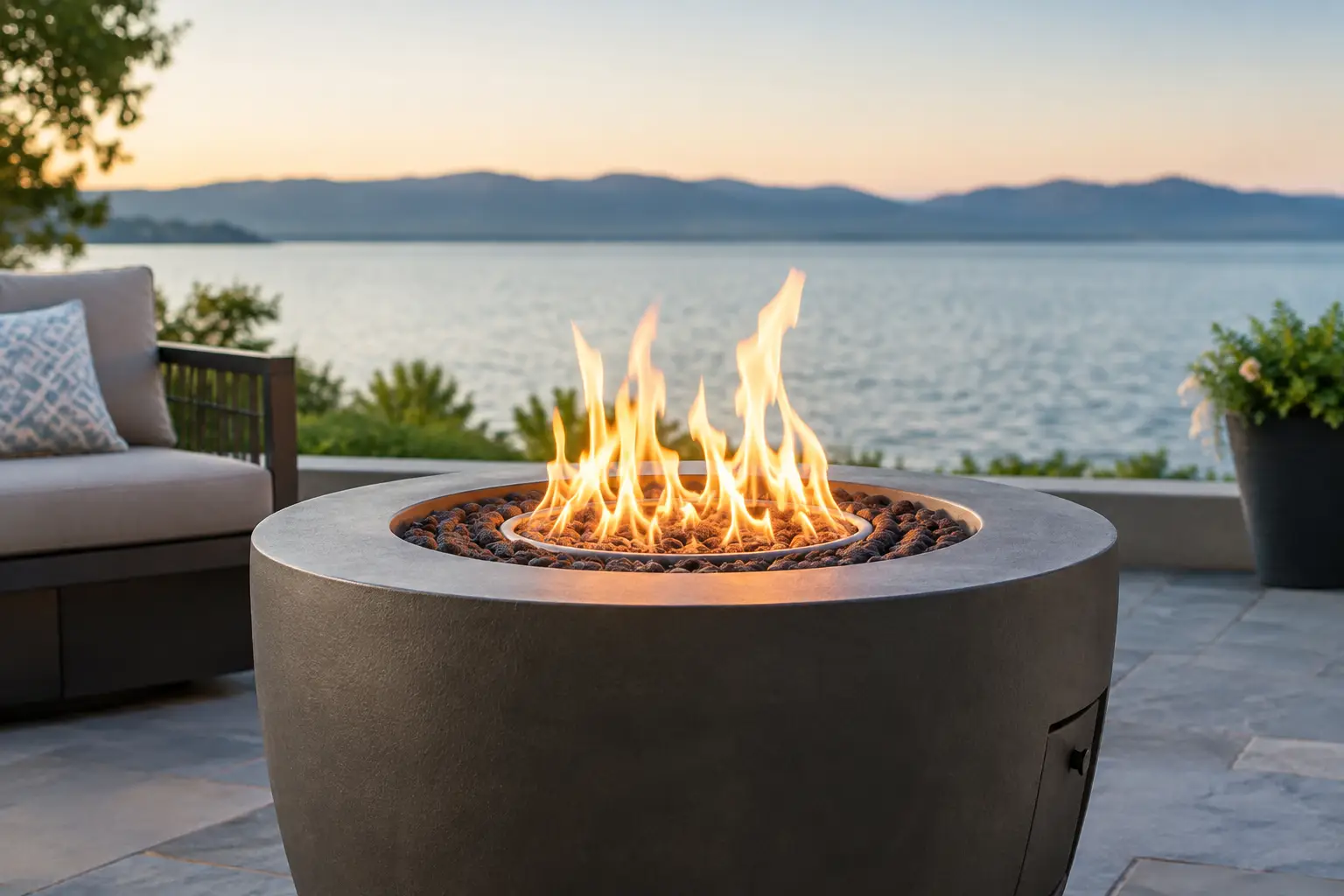
A wood fire can make a backyard feel welcoming, but the smoke can send everyone indoors long before the evening is over. If you are looking for a propane fire pit without smoke, propane is one of the simplest ways to get flame, warmth, and atmosphere without the constant smell in your clothes or eyes.
The key is setting the right expectation. A propane fire pit is not just a fire pit that produces less smoke than wood. When it is assembled, fueled, and used correctly, it creates a clean-burning flame with virtually no visible smoke. That makes it a practical choice for patios, decks, smaller yards, and outdoor seating areas where guests are close together.
Why Propane Fire Pits Produce Virtually No Smoke
Wood smoke comes from burning logs, bark, moisture, and particles that do not burn completely. Even dry firewood can pop, send sparks into the air, and release smoke as the fire changes. Propane is a clean-burning fuel, so it does not create ash, embers, or the heavy plume associated with a wood-burning fire.
A propane fire pit uses a burner system to combine fuel with air and produce a controlled flame. Fire glass, lava rock, or ceramic logs sit around the burner mainly for appearance and flame distribution. They do not act as fuel, which means you do not have to keep adding logs or deal with the smoky startup phase of a traditional fire.
That does not mean every propane flame is completely odor-free. You may notice a light gas odor when connecting a tank, and propane has an added odorant for safety. A properly burning fire pit should not produce black soot, strong fuel smells, or a yellow, lazy flame. If it does, turn the unit off and check the burner openings, hose connection, and manufacturer instructions before using it again.
What to Look for in a Propane Fire Pit Without Smoke
The best fire pit for your space depends on where you will use it, how many people you host, and whether you want it to double as a table. Start with the basics that affect daily use, not just the shape of the fire bowl.
- **BTU output:** BTUs measure heat output. A smaller fire pit may provide around 30,000 to 40,000 BTUs, while larger patio models can reach 50,000 BTUs or more. More BTUs can mean more warmth, but an oversized unit may be uncomfortable on a compact patio.
- **Fuel tank storage:** Many propane fire tables hide a standard 20-pound tank inside the base. This keeps the patio looking tidy and makes the unit easier to place near seating. Open-frame fire bowls may use an external tank, which can be less expensive but requires a spot for the hose and cylinder.
- **Size and surface space:** A low fire table can serve as a coffee table, while a taller model can work with dining-height chairs. If you need room for drinks or snacks, choose a design with a wide ledge or a matching burner cover.
- **Ignition and flame control:** Push-button electronic ignition and an adjustable control knob make lighting and adjusting the flame easier. A cover is also useful for keeping the burner area clean between uses.
Materials matter, too. Steel fire pits are often lighter and more budget-friendly. Aluminum resists rust and can be easier to move. Concrete-look composite designs have a substantial, modern appearance, but they are usually heavier. Choose a finish that works with your existing furniture, then consider how much lifting, covering, and seasonal storage you are willing to do.
Match the Fire Pit to Your Outdoor Space
For a small balcony or apartment patio, first check building rules and local fire regulations. Some properties restrict open flames, propane tanks, or fire features on balconies, even when the product itself is designed for outdoor use. Never assume that a low-smoke flame is automatically permitted.
On a modest patio, a compact round or square fire bowl can create a comfortable focal point without taking over the seating area. Leave enough room for people to walk around it and pull chairs back safely. A fire table with a hidden tank can be especially helpful when every square foot counts.
For larger decks and backyards, you have more flexibility. A rectangular fire table works well between two sofas or across from a row of [outdoor chairs](https://www.theoutsideedit.com/patio-furniture). If your family enjoys hosting, choose a model with enough heat output to reach the seating perimeter and enough table edge for guests to set down a drink.
Wind deserves attention in every space. Propane fire pits do not create wood smoke, but a steady breeze can push heat away from guests and make the flame look uneven. A protected patio, pergola area that meets clearance requirements, or seating arrangement near a windbreak can feel much more comfortable. Always follow the product's stated clearance rules, especially around umbrellas, overhead structures, walls, furniture, and landscaping.
Safe Setup Makes a Big Difference
A [propane fire pit](https://www.theoutsideedit.com/outdoor-heating-cooling) without smoke still involves real flame and pressurized fuel. Use it outdoors only, on a stable, level, noncombustible surface when required by the manufacturer. Do not use a propane fire pit in a garage, screened enclosure, tent, or other enclosed area, even if doors or windows are open.
Before the first use, inspect the hose and regulator for damage. Connect the propane tank with the control knob in the off position, then test the connection according to the fire pit instructions. If you smell gas, do not light the unit. Turn off the tank valve, move away from the area, and address the connection before trying again.
Keep children and pets at a safe distance from the burner area. The flames may be contained, but the fire media and surrounding table surface can become hot. A protective cover helps prevent debris from entering the burner, but it should only go on after the unit has cooled completely.
Do not place extra fire glass, wood, charcoal, or other materials on the burner unless the manufacturer specifically approves them. Adding the wrong media can block gas flow and affect how the fire pit burns. It can also create soot, uneven flames, or a safety issue that defeats the purpose of choosing propane in the first place.
Getting the Cleanest Burn From Your Fire Pit
A clean-burning propane fire pit needs minimal maintenance, but a few habits will keep it looking good and working as intended. Brush leaves, dirt, and standing water away from the burner area before lighting it. If your model uses fire glass or lava rock, arrange it as directed so the burner ports remain clear.
Use a fitted cover whenever the fire pit is not in use. It protects the finish from rain, pollen, and debris while helping prevent insects from nesting near the burner. During long periods without use, close the propane tank valve. If you store the unit for the season, follow the product directions for disconnecting and storing the tank safely outdoors.
Watch the flame each time you light it. A steady blue flame with yellow tips is generally a good sign. Large yellow flames, black marks around the burner, or soot on the fire media suggest that something needs attention. In many cases, cleaning blocked burner ports or repositioning the media solves the problem. If the issue continues, stop using the fire pit until it has been inspected or serviced.
Is Propane Better Than Wood for Your Patio?
It depends on the experience you want. Wood-burning fire pits offer crackling logs and a campfire feel, but they also require firewood, cleanup, spark awareness, and tolerance for smoke that can change direction without warning. Propane offers fast lighting, adjustable heat, no ash, and a much cleaner experience for nearby guests.
For families who want an easy weeknight fire, renters who need a portable option, or hosts who want their patio furniture and blankets to stay smoke-free, propane is often the more convenient choice. The trade-off is that you will need to refill or exchange propane tanks, and the flame does not have the same scent or sound as burning wood.
A propane fire pit can turn an ordinary patio into a place people use longer after sunset. Choose the right size, give it proper clearance, and keep the burner clean, then you can enjoy the warmth and glow without asking guests to move every time the wind shifts. When you are ready to build a more comfortable outdoor setup, shop for a fire pit that fits your space and the way you gather.